

What if the next breakthrough for your organization doesn't come from technology—but from talent you haven't yet hired?
In an era where talent defines competitiveness, global talent acquisition has become both an opportunity and a complex challenge for organizations expanding through Global Capability Centers (GCCs). As enterprises evolve into borderless ecosystems, the ability to attract, engage, and retain the right talent across geographies determines their global success trajectory. Yet, navigating the nuances of global hiring — from compliance to culture — remains a formidable task for even the most sophisticated HR and business leaders.
The world is no longer hiring by geography; it's hiring by skill. As the workforce becomes distributed and digital-first, global talent acquisition strategies must evolve beyond traditional recruiting. Organizations are now tapping into international pools of developers, analysts, designers, and domain experts who can drive transformation irrespective of location.
This shift is particularly visible among Global Capability Centers that have become the innovation and operations engines for multinational corporations. These centers leverage local expertise and global integration to deliver 24x7 productivity and innovation. But building such teams across continents introduces unique challenges — cultural, regulatory, and operational — that demand modern, technology-driven approaches.
Let's explore the top five challenges in global talent acquisition and practical ways to overcome them.
One of the biggest roadblocks in global talent acquisition is managing complex and ever-changing compliance requirements across multiple jurisdictions. Employment laws, taxation norms, visa regulations, and benefits differ widely from one country to another. A practice that's permissible in India may not align with European labor standards or data privacy frameworks like GDPR.
The Solution
The key lies in creating a centralized compliance framework supported by localized expertise. Partnering with firms that offer GCC solutions or Employer of Record (EOR) services allows enterprises to stay compliant while scaling quickly. These partners handle contracts, payroll, and local statutory filings, freeing organizations to focus on strategy instead of administration.
Additionally, digital compliance dashboards and AI-enabled document management systems can automate much of the legal complexity, providing audit trails and real-time updates. The smarter your compliance engine, the faster your global talent acquisition scales without friction.
While diversity drives innovation, it also introduces challenges in communication, collaboration, and cultural alignment. A software architect in Poland, a designer in India, and a product lead in the US may share project goals but differ in work rhythms, feedback styles, and communication nuances. Without thoughtful integration, such differences can create friction, misunderstandings, or reduced team synergy.
The Solution
Culture can't be standardized — but it can be harmonized. Leaders must invest in cultural orientation programs, cross-border leadership workshops, and language-neutral collaboration tools. HR teams should integrate global talent acquisition with diversity and inclusion strategies from the very beginning.
Implementing a knowledge repository — a centralized digital hub for onboarding materials, policies, and project documentation — can also bridge cultural and functional gaps. Such repositories not only democratize access to information but also empower employees to operate autonomously across time zones.
The AI revolution has fundamentally altered the talent equation. Roles in data science, machine learning, cybersecurity, and digital engineering are in unprecedented demand. Unfortunately, supply hasn't kept pace with demand — especially in emerging economies that are also competing for the same global skill pool.
The Solution
Winning the war for niche talent requires a mix of creativity and precision. Organizations must move beyond conventional job boards and adopt AI recruitment tools that identify, assess, and engage candidates globally. These tools analyze skill data, online portfolios, and behavioral signals to predict candidate fit more accurately than traditional screening methods.
Simultaneously, companies should invest in reskilling and internal mobility programs to nurture in-house capabilities. The smartest global talent acquisition strategies blend external hiring with internal development, ensuring continuity and long-term retention.
Forward-thinking GCCs also partner with universities and specialized training institutes to create custom curriculums aligned to their future needs. This approach builds a sustainable pipeline of talent rather than competing endlessly in the open market.
Enterprises expanding globally often struggle to maintain a balance between cost efficiency, hiring speed, and candidate quality. Traditional recruitment cycles can take months, and when multiplied across geographies, the delay can severely impact business timelines. Meanwhile, the cost of poor hiring — both financial and reputational — remains steep.
The Solution
The Build-Operate-Transfer (BOT) model is emerging as a strategic solution for companies scaling global talent acquisition operations. In this model, a specialized partner sets up and manages the offshore team — handling recruitment, operations, and governance — before transferring it back to the client once it reaches maturity.
This model ensures faster time-to-market, lower operational risk, and predictable costs. Moreover, integrating Talent Solutions like predictive analytics, candidate engagement automation, and digital interview platforms can further optimize efficiency.
For sustained success, companies should establish clear metrics — such as time-to-fill, quality-of-hire, and offer-to-join ratio — and review them regularly with both internal teams and partners. Data-driven decision-making transforms global talent acquisition from a reactive function into a strategic growth enabler.
Finding great talent is only half the battle; keeping them engaged is the real test. Remote employees often experience isolation, limited career visibility, or lack of connection with the company's mission. For organizations running global operations or GCCs, attrition in critical roles can derail entire projects.
According to an IBM study, employees who felt that their organization wasn't helping them achieve their career goals were 12 times more likely to consider leaving compared to those who did feel supported. This highlights how crucial it is for global enterprises to provide clear growth pathways and continuous engagement opportunities for their workforce.
The Solution
Retention begins at hiring. Global talent acquisition leaders must align role expectations, growth paths, and work culture fit during the recruitment process itself. Once onboarded, regular engagement surveys, virtual town halls, and digital recognition programs keep employees connected to the organization's purpose.
Using analytics to identify early signs of disengagement — such as declining participation or reduced collaboration — helps in proactive intervention. Learning and upskilling programs must be woven into the employee lifecycle, giving individuals a sense of progress and belonging.
Companies can also leverage AI-driven sentiment analysis tools that monitor engagement trends across geographies. The more personalized the employee experience, the higher the retention rate in a competitive global market.
As the global economy moves toward a skills-based model, global talent acquisition is no longer just a support function — it's a growth engine. The most successful enterprises are those that treat hiring not as an operational activity but as a strategic differentiator.
Modern GCCs exemplify this philosophy. Acting as a GCC hub, they bring together technology, process, and people innovation to create competitive advantages for parent organizations. By blending agility with governance, these centers have redefined how global enterprises operate — and their success depends entirely on how effectively they attract and manage global talent.
Artificial Intelligence has introduced a paradigm shift in global talent acquisition. From intelligent sourcing to predictive matching, AI can analyze millions of data points to identify high-potential candidates faster than ever before. Chatbots automate engagement, while AI video analytics assess soft skills and behavioral traits.
This convergence of data and decision-making is particularly vital for scaling teams across continents. The ability to match candidates based on cultural adaptability, communication style, and learning potential is as important as technical competence. A recent study found that nearly 67% of HR professionals believe that AI has many benefits and a positive impact on the recruitment process.
However, the human element remains irreplaceable. AI amplifies recruiter efficiency but cannot substitute human empathy or judgment. The winning formula for modern global talent acquisition combines machine intelligence with human insight — technology does the heavy lifting, while humans ensure alignment with values and purpose.
Looking ahead, organizations must view global talent acquisition through the lens of resilience. Global disruptions — from economic shifts to geopolitical changes — have made agility a core competency. Companies that can pivot hiring strategies swiftly and maintain a steady talent pipeline will emerge stronger.
Strategically, this involves building interconnected ecosystems of partners, universities, digital platforms, and AI-powered infrastructure. The Build-Operate-Transfer model will likely evolve further, with hybrid structures allowing organizations to scale rapidly while maintaining control.
Ultimately, the future belongs to those who can convert talent diversity into innovation. As enterprises harness global intelligence, inclusive leadership, and digital dexterity, the boundaries between “local” and “global” will blur — giving rise to a truly borderless workforce.
The journey of global talent acquisition is not without its hurdles, but each challenge also presents a strategic opportunity. From compliance and culture to technology and retention, organizations that adopt a structured, AI-enabled, and people-centric approach will build stronger foundations for long-term success.
In the next decade, as enterprises scale new geographies, global talent acquisition will define who wins and who merely survives. Those that blend agility, intelligence, and empathy into their hiring DNA will build organizations ready for the future — powered by purpose, driven by innovation, and united through talent.
Because at the heart of every global transformation lies a single, timeless truth — people build progress. And mastering global talent acquisition is how great companies build the future.
At Anlage, we help global enterprises overcome these very challenges through end-to-end GCC solutions — from strategy and setup to operations and scaling. Our AI-driven Talent Solutions, combined with a proven Build-Operate-Transfer model, enable organizations to establish and expand high-performing teams with speed, compliance, and confidence.
Ready to accelerate your GCC journey? Contact us today to explore how Anlage can help you attract world-class talent, streamline operations, and build your next global success story.
Global talent acquisition is the process of hiring skilled professionals from across the world. For GCCs, it ensures access to diverse expertise, drives innovation, and supports round-the-clock global operations.
Key challenges include managing compliance across countries, cultural differences, talent shortages in emerging technologies, balancing speed with quality, and retaining top performers.
Enterprises can overcome skill gaps through upskilling programs, partnerships with universities, and using AI recruitment tools to identify and engage niche talent globally.
AI automates sourcing, screening, and matching candidates while providing predictive insights on candidate fit, reducing hiring time, and improving decision-making quality.
Anlage provides comprehensive GCC solutions and Talent Solutions that integrate AI-driven hiring, compliance, and scalability — helping enterprises build high-performing global teams seamlessly.
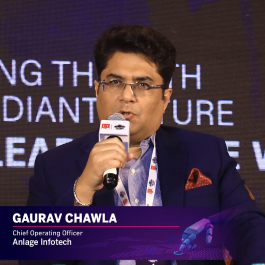

Gaurav Chawla, COO of Anlage Infotech, emphasized the transformative role of AI-powered analytics in HR at the 5th Edition of the GCC Summit 2024. Highlighting predictive analysis and smart tool utilization, he shared how these technologies can cut hiring cycle times by up to 60%, driving greater efficiency. The event took place at GMR Aerocity Hyderabad.
READ MORE

