

Imagine this: your company is ready to tap into India's world-class tech talent, cost advantages, and thriving innovation ecosystem — but one wrong structural choice could mean higher taxes, compliance hurdles, or restricted scalability.
When multinational corporations plan to establish a presence in India, one of the most critical early decisions involves choosing the legal entity structure. This choice determines everything from taxation and repatriation to governance, compliance, and operational flexibility. For companies launching Global Capability Centers (GCCs) — a model that enables enterprises to leverage India's vast talent pool and cost efficiencies — the right entity choice can set the foundation for sustainable long-term success.
In this comprehensive guide, we explore the 7 legal entity options available for multinationals expanding into India, their advantages, limitations, and ideal use cases. Whether your goal is to test the market, establish a full-fledged development hub, or build a scalable global business hub, this article will help you make an informed decision.
Before setting up a Global Capability Center, it's vital to understand why a legal entity matters. The entity defines how your business operates under Indian law — who owns it, how profits are taxed, what liabilities exist, and what degree of control the parent company maintains.
In India, a legal entity essentially acts as the local “face” of the global parent organization. It ensures regulatory compliance, provides an operational identity, and protects intellectual property, contracts, and assets. For enterprises exploring GCC solutions, the right structure balances control, tax efficiency, and scalability while minimizing compliance risks.
A Wholly Owned Subsidiary (WOS) is one of the most preferred legal entity options for foreign corporations establishing operations in India. In this model, the foreign parent company holds 100% of the equity shares in the Indian subsidiary.
Key Benefits:
Ideal For: Multinationals setting up large-scale GCCs, R&D centers, or delivery hubs that plan to expand headcount rapidly and operate long-term.
An LLP combines the flexibility of a partnership with the limited liability of a corporation. It's a modern legal entity structure that allows global enterprises to collaborate with local partners without exposing themselves to excessive financial risk.
Key Benefits:
Ideal For: Firms exploring niche technology projects, tech services, or joint ventures where shared risk and flexibility are essential.
A Branch Office operates as an extension of the parent company and is one of the simplest ways to enter India without incorporating a new legal entity. However, it requires approval from the Reserve Bank of India (RBI) and functions under strict guidelines.
Key Benefits:
Limitations: Cannot engage in commercial trading, manufacturing, or retail sales.
Ideal For: Foreign entities providing GCC Staffing Solutions, liaison, or technical support where limited operational scope is acceptable.
For companies with short-term contracts or specific deliverables in India, a Project Office serves as a temporary legal entity designed to execute a particular project.
Key Benefits:
Ideal For: Engineering, infrastructure, and technology companies executing client projects or pilot GCC solutions before full-scale rollout.
A Liaison Office acts as a representative body for foreign corporations, enabling communication, coordination, and information exchange between the Indian market and the global headquarters. It cannot generate revenue directly.
Key Benefits:
Ideal For: Companies in the early stages of market exploration, assessing what is GCC, or evaluating India as a future gcc hub destination.
A Joint Venture enables a foreign company to collaborate with an Indian partner, combining global expertise with local market knowledge. This legal entity is governed by a contractual agreement defining ownership, profit-sharing, and operational control.
Key Benefits:
Ideal For: Global corporation entrants seeking rapid local integration or companies in regulated industries like defense, telecom, or finance.
Though not a traditional legal entity, the Build-Operate-Transfer model deserves mention due to its rising popularity among enterprises setting up Global Capability Centers. Under this model, a local partner establishes and manages the center on behalf of the client before transferring ownership after a defined period.
Key Benefits:
Ideal For: Companies testing India's potential as a global business hub without committing large capital upfront.
The following provides a quick comparison of the common entity choices:
| Entity | Ownership | Regulatory Complexity | Tax Implications | Ideal For |
|---|---|---|---|---|
| Wholly Owned Subsidiary | 100% Foreign | Moderate | Corporate tax applicable | Full-scale GCC setup |
| LLP | Shared | Low | Pass-through taxation | Partnerships, tech alliances |
| Branch Office | 100% Foreign | High (RBI approval) | Taxed as foreign entity | Representative operations |
| Project Office | 100% Foreign | Moderate | Taxed on project income | Time-bound projects |
| Liaison Office | 100% Foreign | Low | Non-taxable (no revenue) | Market exploration |
| Joint Venture | Shared | Moderate | Based on structure | Strategic collaborations |
| BOT Model | Partner-owned initially | Low to moderate | Post-transfer applicable | Scalable entry model |
Choosing the ideal legal entity depends on your company's strategic intent, investment appetite, and long-term India plan. Below are a few guiding parameters:
1. Control and Ownership: If maintaining complete control is critical, a Wholly Owned Subsidiary is the best choice. For shared risk or local collaboration, an LLP or JV works better.
2. Compliance Appetite: Some entities, like Branch or Project Offices, demand strict RBI and FEMA compliance, while LLPs offer relaxed obligations.
3. Scalability: For enterprises envisioning India as a gcc hub, a WOS or BOT model provides scalability with minimal disruption.
4. Tax Efficiency: The right legal entity can help optimize taxes via incentives such as R&D credits, SEZ benefits, or double taxation avoidance agreements (DTAA). According to KPMG, India's corporate tax rate for new manufacturing companies can go as low as 15%, making it one of the most competitive in Asia.
5. Exit Flexibility: A BOT or JV model offers flexible exit routes, making them ideal for pilot GCCs or transitional setups.
India's regulatory landscape for foreign investment is robust yet supportive. Here's an overview of the key governing acts and institutions involved in legal entity setup:
Proper adherence ensures a smooth launch, especially when aligning with GCC Staffing Solutions and workforce deployment under Indian labor laws.
India is no longer just an outsourcing destination — it's a thriving innovation economy driving global enterprise transformation. With its deep engineering talent, favorable time zone, cost advantages, and evolving infrastructure, India has become the preferred global business hub for technology and operations.
Thousands of enterprises, from startups to Fortune 500s, are establishing Global Capability Centers in cities like Bengaluru, Hyderabad, Pune, and Gurugram. These centers are now powering AI, cloud, and tech services for global markets. According to Deloitte, India is home to a sweeping 50% share of global GCCs.
Choosing the right legal entity at the outset allows companies to scale seamlessly, comply effortlessly, and attract top-tier talent — transforming India into a strategic pillar of their international growth story.
Selecting the right legal entity for your India operations isn't just a legal formality — it's a strategic foundation. Whether you're testing the waters with a Liaison Office, forming a Joint Venture, or opting for a BOT transition to a Wholly Owned Subsidiary, your entity structure will shape everything from governance to profitability.
As more enterprises pursue GCC solutions to drive innovation and efficiency, a well-designed legal entity becomes both a shield and an enabler — ensuring compliance, tax efficiency, and scalable growth.
At Anlage, we provide end-to-end GCC solutions — helping global corporations choose the right legal entity, set up operations, ensure compliance, and scale seamlessly in India.
Ready to explore your options?
Contact us to discover how Anlage can
help you build and scale your GCC in India — faster, smarter, and fully
compliant.
A legal entity in India is an officially registered organization recognized by law, allowing it to own assets, enter contracts, hire employees, and operate independently of its owners.
Selecting the right legal entity ensures compliance, tax efficiency, and operational control — crucial for Global Capability Centers (GCCs) to scale smoothly in India.
A Wholly Owned Subsidiary (WOS) is often the preferred legal entity for multinationals because it offers full control, flexibility, and long-term scalability.
Yes. A foreign company can operate through a Branch Office, Liaison Office, or Project Office, which act as extensions of the parent organization.
Anlage provides end-to-end GCC solutions, including selecting the right legal entity, ensuring compliance, managing recruitment, and scaling operations seamlessly.
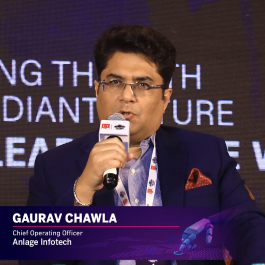

Gaurav Chawla, COO of Anlage Infotech, emphasized the transformative role of AI-powered analytics in HR at the 5th Edition of the GCC Summit 2024. Highlighting predictive analysis and smart tool utilization, he shared how these technologies can cut hiring cycle times by up to 60%, driving greater efficiency. The event took place at GMR Aerocity Hyderabad.
READ MORE

