

If you think setting up a GCC is simply about hiring great talent in India, think again. Many global enterprises—despite strong budgets and experienced leadership—have seen their GCCs stall or underdeliver. Not due to talent gaps or cultural friction, but because of one silent killer: a poorly designed operating model.
A successful Global Capability Center (GCC) is no longer a cost-arbitrage play; it's a strategic engine for long-term competitive advantage. Yet companies repeatedly fall into avoidable operating model traps that slow down scaling and weaken the GCC's ability to drive innovation, efficiency, and transformation.
In this article, we break down the six most common operating model mistakes organizations make when building GCC teams—and how to prevent them with smarter planning, stronger governance, and future-ready design. These insights will help you build a more resilient GCC that delivers meaningful enterprise impact.
The biggest mistake companies make is jumping into execution without defining the why behind their GCC. A GCC should never be set up as a back office or support arm by default. Its mission should be aligned with enterprise-wide priorities, such as:
However, many organizations start by hiring talent first and thinking strategy later—leading to an operating model that is disconnected from business goals.
A well-defined mission gives clarity on the scope of work, team structures, capability levels, performance expectations, tech stack, and governance processes. Without this clarity, your GCC can easily turn into a captive unit performing fragmented and low-impact tasks.
The solution is simple: articulate a crisp mission statement, define a 3-year vision, create capability roadmaps, and ensure every operating model pillar—talent, processes, tools, and governance—is built around this foundation.
Most companies assume that replicating the headquarters' organizational structure will automatically create alignment. However, this is another major operating model trap.
The parent company's structure evolved for a different context—different geography, regulatory environment, talent market, maturity level, and customer proximity. GCCs require a tailored structure that reflects:
A GCC is not a carbon copy. It is a global business hub designed for speed, innovation, and cost-efficient scaling.
Companies must customize their structure based on functions, capability maturity, local market dynamics, and desired outcomes. An agile and hybrid structure—rather than a fully mirrored one—creates far more flexibility and efficiency.
For a GCC to function as an extension of global operations, the governance layer must be strong. But this is where many organizations fall short in their operating model planning.
According to the latest KPMG-NASSCOM GCC Survey, over 72% of GCC leaders cite governance-linked talent and integration challenges as a top priority area—a clear indicator that most centers still struggle to establish strong cross-border coordination and decision-making frameworks.
Common governance challenges include:
When governance is weak, teams end up working in silos. Communication gaps widen. Escalations increase. The global organization starts seeing the GCC as a “service provider” instead of an integral part of the enterprise.
The most effective GCCs treat governance as a design discipline—not an afterthought. This includes defining:
When governance is well-designed, the GCC stops being a dependency and becomes a force multiplier within the enterprise.
Many GCCs design the operating model first and create the talent strategy later. This leads to misaligned job levels, inefficient team structures, and uneven workloads. Talent considerations should shape the operating model—not follow it.
According to the GCC Talent Trends report, 51% of GCCs in India cite talent retention as their top concern—a clear indicator that without a strong, aligned talent strategy, GCCs struggle to maintain stability and capability depth.
Companies must factor in:
The GCC talent market is dynamic. Roles like data engineering, cybersecurity, cloud infrastructure, and AI/ML require more seniority and broader responsibilities in India compared to global markets. A standard job description from HQ is not enough.
Moreover, the factors of globalization—talent mobility, demographic shifts, digital adoption, and cross-border collaboration—continue to reshape hiring models. GCCs must adapt quickly.
A strong talent strategy includes competency mapping, hiring scorecards, internal academies, leadership development plans, and ongoing performance management. This ensures that your operating model remains scalable, resilient, and future-ready.
This is one of the most damaging operating model mistakes.
When GCCs are seen merely as low-cost delivery units, three things happen:
But the world's most successful GCCs—across finance, retail, healthcare, and technology—have evolved into innovation engines, digital transformation hubs, and centers of excellence.
Companies that limit the GCC to cost-based functions never realize its full potential. To unlock innovation, GCCs should be integrated with enterprise strategy, empowered with technology, and encouraged to build internal accelerators. They should drive automation, analytics, AI, product development, and customer-centric transformation.
This is also where the debate of insourcing vs outsourcing becomes critical. Outsourcing may offer cost efficiency, but insourcing through a high-performing GCC provides:
The most progressive organizations blend the two strategically—but they ensure that the GCC remains a core driver of enterprise innovation.
The final major mistake? Short-term thinking. Many companies design their operating model only for immediate needs—50 hires, one function, a handful of processes. But GCCs evolve rapidly. In 12–18 months, scale requirements may triple.
Without scalability built into the foundation, companies face challenges like:
This creates frustration, slows down transformation, and forces companies to redesign their operating model prematurely—which is expensive and disruptive.
A scalable GCC blueprint includes:
When scalability is baked into the operating model from day 1, the GCC evolves smoothly into a gcc hub that drives enterprise-wide outcomes.
To successfully build high-performing GCC teams, companies must adopt a holistic approach to the operating model—one that integrates strategy, talent, governance, and scalability.
Ensure all stakeholders understand why the GCC exists and what long-term value it aims to deliver.
Don't replicate HQ blindly. Customize org design based on local talent maturity and business needs.
Create shared OKRs, steering committees, decision matrices, and cross-border operating rhythms.
Prioritize leadership hiring, capability development, skill-based structures, and succession plans.
Shift the narrative from cost center to innovation engine and transformation catalyst.
Use modular structures, future-ready tech stacks, and standardized workflows that enable growth.
The next generation of GCCs will function as GCC solutions partners—not support centers. They will drive AI adoption, digital engineering, cloud modernization, and enterprise transformation initiatives. As GCCs mature, they increasingly take ownership of end-to-end business outcomes, product development cycles, and internal consulting support.
More importantly, companies that master their operating model from Day 1 will be able to leverage India as a powerhouse for enterprise excellence—powered by talent density, innovation ecosystems, and global leadership capability.
As GCCs expand globally and evolve into strategic value creators, the emphasis will shift toward:
The organizations that get this right will enjoy a competitive advantage that compounds year after year.
Avoiding these six operating model mistakes is not just about efficiency—it's about unlocking the full strategic power of GCCs. Companies that get their clarity, governance, talent, and scalability right build centers that consistently outperform and innovate.
Whether you're setting up your first GCC or scaling an existing one, these insights can help you build a stronger, future-ready foundation that drives real enterprise impact.
And as Global Capability Centers become core to global strategy, a well-designed operating model is not optional—it's your competitive edge. At Anlage, we specialize in helping global enterprises build and scale high-performing GCC solutions in India.
Ready to accelerate your GCC journey? Contact us and our team will be happy to guide you.
A strong operating model ensures clarity, governance, talent alignment, and scalability. Without it, GCCs struggle to deliver innovation, efficiency, and business impact.
The most common mistake is launching the GCC without a clear mission or long-term vision, which leads to fragmented roles, unclear expectations, and limited impact.
By defining clear decision rights, creating joint steering committees, establishing shared KPIs, and ensuring seamless integration of tools and workflows across global teams.
GCCs often fail to scale because scalability isn't built into the operating model early. This leads to overloaded leaders, bloated processes, and structural bottlenecks as the team grows.
Anlage provides end-to-end GCC solutions—from strategy and operating model design to talent, governance, and scaling support—helping enterprises build high-performing, future-ready GCCs.
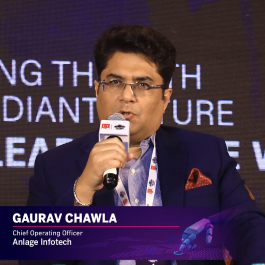

Gaurav Chawla, COO of Anlage Infotech, emphasized the transformative role of AI-powered analytics in HR at the 5th Edition of the GCC Summit 2024. Highlighting predictive analysis and smart tool utilization, he shared how these technologies can cut hiring cycle times by up to 60%, driving greater efficiency. The event took place at GMR Aerocity Hyderabad.
READ MORE

